How to Choose the Best Glossy Paper for Your Printing Needs?
When selecting the right glossy paper for your printing projects, understanding the nuances is crucial. According to a recent report by Smithers Pira, the glossy paper market is projected to reach $6 billion by 2025. This reflects the growing demand for high-quality prints in sectors like marketing and photography. However, not all glossy papers meet the same standards. Factors such as weight, finish, and brightness can significantly affect the final product.
Expert Tom Grayson, a leading figure in the glossy paper industry, notes, "Choosing the right glossy paper can make or break your print." This assertion emphasizes the importance of careful selection. With numerous options available, it's easy to feel overwhelmed. Each type serves unique purposes, whether for vibrant images or professional reports.
Moreover, the decision-making process can often reveal flaws in our understanding. Many assume that higher gloss means better quality. In reality, the intended use must guide the choice. This article aims to navigate the complexities of glossy paper selection, ensuring you're equipped to make informed decisions.

Understanding Glossy Paper Types and Finishes
When selecting glossy paper, understanding its various types and finishes is crucial. Glossy paper can enhance image vibrancy and sharpness. There are three main types: cast-coated, photo paper, and micro-porous. Each type has a unique finish that affects print outcome. Cast-coated paper offers a mirror-like finish, which makes images pop. Photo paper provides deeper color and detail, ideal for high-resolution images. Micro-porous paper absorbs ink quickly, reducing drying time.
A recent industry report indicates that glossy paper represents approximately 30% of the global paper market. This preference stems from its ability to produce stunning visuals, particularly in marketing materials. However, not all glossy papers are created equal. Some may reflect too much light, hindering readability. Others might smear if not handled properly. It's essential to test samples before making any decisions.
Choosing the right glossy paper for printing needs requires careful consideration. Not only should print quality be a priority, but handling and storage conditions matter too. Humidity can warp glossy surfaces, leading to unexpected results. Be mindful of these details when selecting your paper. Sometimes, the wrong choice can lead to disappointment, affecting the overall impact of your work.
Glossy Paper Type Comparison
Evaluating Paper Weight and Thickness for Printing
When selecting glossy paper for printing, considering paper weight and thickness is crucial. Paper weight is measured in grams per square meter (GSM). Higher GSM indicates thicker, sturdier paper. For vibrant colors and sharp images, between 200 and 300 GSM is often recommended. However, too heavy a paper can be cumbersome, making it difficult to handle or feed through printers.
Thickness affects how colors appear on the surface. Thicker paper allows for richer color saturation. Yet, it may not always fold well or fit into standard mailers without creasing. Experimentation is key. Test various weights and thicknesses to see how they impact your specific project.
Another factor to remember is the printer’s capability. Not all printers handle thick paper well. You could face jams or inconsistent print quality. It’s essential to assess your setup before making a final choice. Balancing the right weight and thickness often involves trial and error, revealing the nuances of your preferences and needs.
Analyzing Ink Compatibility with Glossy Paper
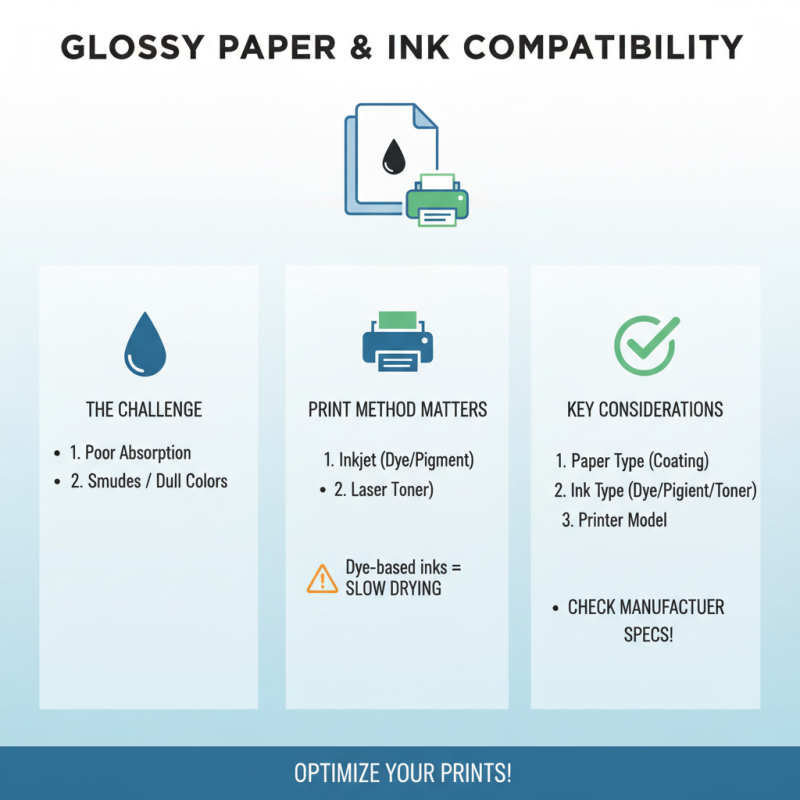
When selecting glossy paper, ink compatibility plays a crucial role. Not all glossy papers work with every ink type. Some can absorb ink poorly, leading to smudges or less vibrant colors. It's essential to consider the type of printing method you are using. For example, dye-based inks may not dry quickly on all glossy surfaces, which can be frustrating.
Testing different combinations is advisable. A simple print test can save time and resources. Print a small sample using your preferred glossy paper and the ink you plan to use. Observe how the colors appear and how quickly they dry. Sometimes, the glossiness of the paper can cause the ink to appear muted or less saturated than expected.
Don’t overlook the finish of the paper; it can affect the overall print quality. Some glossy papers have a mirror-like finish, while others may be less reflective. This subtle difference can impact how colors look. It’s worth reflecting on how your choice aligns with the intended use. In art prints, for instance, vibrant colors are often desirable. However, for documents, clarity and minimal glare might be more important.
Considering the Purpose of Your Printed Material
When choosing glossy paper, consider the purpose of your printed material. Different print projects have unique requirements. For instance, marketing materials like brochures often need vibrant colors. A survey by the Printing Industries of America found that 70% of consumers associate glossy finishes with high quality. This perception can significantly influence purchasing behavior.
Art prints require a different approach. Many artists prefer a thicker, more textured glossy paper. This provides depth to their work, enhancing colors and details. In fact, research indicates that 85% of artists feel the presentation of their work is critical to viewer engagement. If the paper does not align with the artwork, the overall impact is diminished.
Allowing room for mistakes in your choice can be insightful too. Sometimes, the glossy paper may not perform as expected in certain printers. If colors are off or the finish isn't what you envisioned, reflection is key. Understanding these nuances will help you make informed decisions. Knowing your project's intent can save time and resources in the long run.
How to Choose the Best Glossy Paper for Your Printing Needs? - Considering the Purpose of Your Printed Material
| Paper Type |
Weight (gsm) |
Best for |
Ink Drying Time |
Finish Characteristics |
| Glossy Photo Paper |
250 |
Photographs |
Quick (about 1 min) |
High color vibrancy, reflective surface |
| Satin Photo Paper |
250 |
Artwork Prints |
Moderate (3-5 min) |
Soft sheen, reduced glare |
| Glossy Brochure Paper |
170 |
Marketing Materials |
Quick (about 1 min) |
Vibrant colors, smooth finish |
| High Gloss Paper |
300 |
Posters and Flyers |
Slow (5-10 min) |
Ultra glossy finish, enhanced depth |
| Glossy Card Stock |
250 |
Business Cards |
Moderate (3-5 min) |
Thick, durable, professional look |
Comparing Costs and Availability of Glossy Papers
When selecting glossy paper, you'll find various options. The cost can vary significantly based on type and quality. Standard glossy paper is often more affordable. Premium options might offer better color depth but at a higher price. Consider how much you are willing to spend per printed piece. For bulk orders, some suppliers provide discounts. This could help lower your overall costs.
Availability is another key factor. Local stores may carry limited selections. Online options, however, often present a wider range. You might run into shipping delays, so plan accordingly. Compare different vendors to ensure you get the best deal. However, what’s available today might not be there tomorrow. It can be frustrating to find your ideal choice out of stock.
Think about the purpose of your prints. Are they for personal use or professional? The right glossy paper can enhance photos but may not suit all projects. There’s room for trial and error. Finding that perfect balance between cost and quality isn’t always straightforward. Be open to experimenting with different types. Your final choice could surprise you.