
Leave Your Message
Choosing the right Paper Roll can influence production speed, print quality, waste, and customer satisfaction. The decision is rarely as simple as selecting the lowest price. A roll that looks economical may create dust, curl, jams, or uneven feeding during a busy shift.
Paper-converting consultant David A. Taylor explains, “The best paper roll is the one that performs consistently inside your actual process.” This practical view matters. Businesses should examine roll width, core size, diameter, basis weight, coating, moisture level, and surface finish. These details must match the machine, product design, storage conditions, and expected workload. A thermal receipt printer needs different material from a packaging line or a large-format plotter.
Measure the machine first.
Then test the paper.
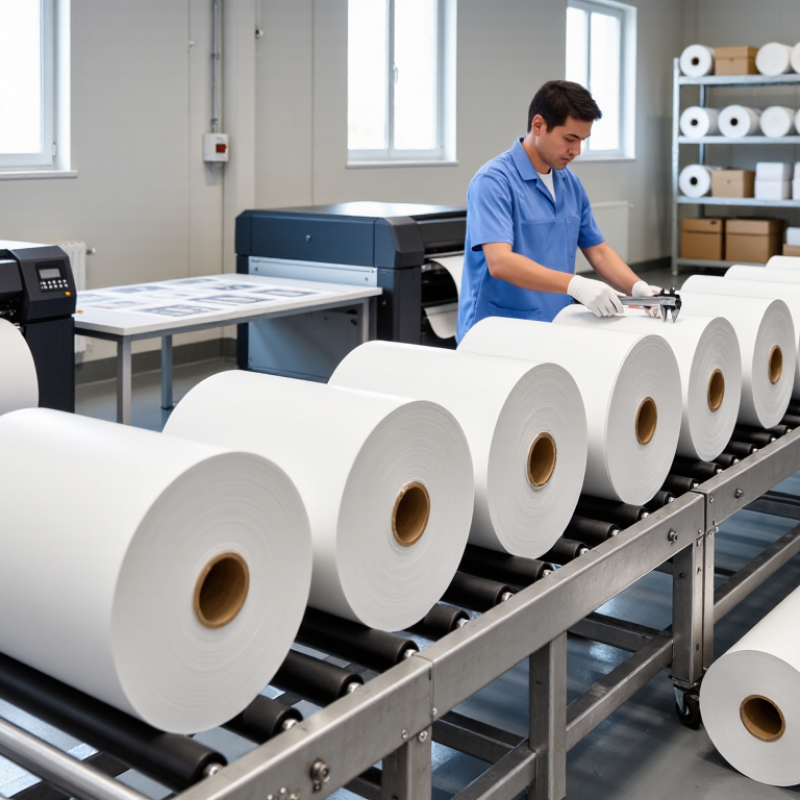
A small trial roll can reveal problems before a full shipment arrives. Watch how the roll unwinds, how cleanly it cuts, and whether the printed surface remains sharp. Check the outer wrapping too. Damaged packaging may expose the paper to humidity, dust, or crushing.
Experience also teaches an uncomfortable lesson: specifications alone do not guarantee performance. A technically suitable Paper Roll may still fail in a poorly maintained machine. Storage mistakes can matter just as much as supplier quality. I may not always choose the heaviest or brightest paper, because those features can increase cost without improving the final product. Careful testing, supplier communication, and honest review of production data create a more reliable choice.
Choosing a paper roll starts with the job, not the machine. Bond rolls suit invoices, delivery notes, and office printers because they remain readable during handling. Thermal rolls work well for receipts, queue tickets, and shipping labels. They print through heat, so they need no ink ribbon. Coated rolls support sharper images and stronger color, making them useful for shelf labels or promotional tags. Kraft rolls fit wrapping and void fill, especially where tear resistance matters.
Scale also changes the decision. The FAO Yearbook of Forest Products reports global paper and paperboard production at about 416 million tonnes in 2022. That volume reflects a wide range of performance needs, not one universal roll. A 2024 Grand View Research analysis values the thermal paper market at roughly 4.5 billion dollars in 2023. However, price alone can mislead. A cheaper roll may create jams, faded text, or excessive waste.
Tips: Check core size, roll width, outer diameter, and printer compatibility before ordering. Test one full roll in real conditions. Store rolls away from heat, moisture, and direct light. I once saw a “compatible” thermal roll fail after several days near a warm checkout counter. The specification looked correct. The environment was not. Also review paper weight, recyclability, and adhesive strength when selecting coated or label rolls. Small differences become expensive across thousands of transactions.
| Paper Roll Type | Typical Basis Weight | Key Characteristics | Common Business Applications | Recommended Printing or Processing | Best Choice When | Important Limitations |
|---|---|---|---|---|---|---|
| Thermal Paper Roll | Approximately 48–80 g/m² | Heat-sensitive coating creates an image without ink or toner; provides fast, quiet printing. | POS receipts ATM receipts Queue tickets Shipping labels | Direct thermal printers and thermal receipt printers | Fast, low-maintenance receipt or ticket printing is required. | Images can fade when exposed to heat, light, friction, plasticizers, or chemicals. It is generally not suitable for long-term archival records. |
| Carbonless Paper Roll | Approximately 45–70 g/m² per ply | Produces duplicate or triplicate copies through pressure-sensitive chemical coatings; does not require carbon sheets. | Delivery notes Invoices Service orders Transaction records | Impact printers, roll-based form printers, and manual writing | Multiple copies of the same form must be created at the point of service. | The number of usable copies depends on the ply configuration. Excessive pressure, moisture, and improper storage may reduce copy quality. |
| Bond Paper Roll | Approximately 60–90 g/m² | Uncoated, writable, and suitable for clear text and line graphics; available in standard and high-brightness grades. | Plotter drawings Office documents Work orders Wide-format plans | Inkjet, laser, plotter, and impact printing, depending on the grade | Documents need to be written on, filed, copied, or printed with conventional ink. | Uncoated paper may absorb ink and is less resistant to water, oil, and abrasion than coated grades. |
| Coated Paper Roll | Approximately 70–150 g/m² | Surface coating improves smoothness, ink holdout, detail, and color reproduction; may be matte, silk, or gloss. | Posters Retail graphics Indoor signage Promotional displays | Inkjet, offset, or digital printing, according to the coating specification | Sharper images, stronger color impact, and a smoother professional appearance are priorities. | Some coated surfaces are less suitable for handwriting, folding, or environments with moisture and heavy abrasion. |
| Uncoated Offset Paper Roll | Approximately 60–120 g/m² | Porous, economical, and easy to write on; offers a natural paper texture and reliable ink absorption. | Forms Books Continuous stationery Internal documents | Offset, digital, inkjet, and flexographic printing, subject to the paper grade | Cost efficiency, readability, and writability are more important than high-gloss image quality. | Colors and fine images may appear less vivid than on coated paper because the surface absorbs more ink. |
| Self-Adhesive Label Stock Roll | Facestock commonly 60–100 g/m², excluding liner and adhesive | Combines a printable face material, pressure-sensitive adhesive, and release liner; available with permanent or removable adhesive. | Product labels Barcode labels Asset tags Packaging identification | Direct thermal, thermal transfer, inkjet, laser, or flexographic printing, depending on construction | Printed information must be attached directly to products, cartons, shelves, or equipment. | Adhesive performance varies with surface cleanliness, temperature, humidity, and substrate type. The liner adds waste unless recycled appropriately. |
| Thermal Transfer Paper Roll | Approximately 60–100 g/m² | Requires a separate ribbon; produces durable, high-contrast images on compatible paper or synthetic materials. | Warehouse labels Asset identification Product labeling Logistics documents | Thermal transfer printers with wax, wax-resin, or resin ribbons | Printed data must resist handling, smearing, or longer storage than direct thermal output typically allows. | Requires ribbon management and correct matching of ribbon, printhead, and face material. Operating cost is higher than direct thermal for some uses. |
| Food-Grade Paper Roll | Approximately 30–80 g/m² | Paper is selected for intended food-contact use and may include grease-resistant, moisture-resistant, or barrier treatment. | Food wrapping Bakery packaging Deli sheets Takeaway packaging | Flexographic, rotogravure, or digital printing using suitable food-contact-compliant materials | Paper will directly contact food and must meet the applicable food-contact regulations for the sales region. | Food-contact compliance depends on the complete paper, ink, coating, adhesive, and conversion system—not paper weight alone. |
| Kraft Paper Roll | Approximately 40–120 g/m² | Strong, tear-resistant paper with a natural brown or bleached appearance; often selected for packaging and protective wrapping. | Void fill Wrapping Paper bags Protective packaging | Flexographic, digital, or gravure printing; also suitable for cutting, folding, and forming | Packaging needs strength, flexibility, and a natural paper appearance. | Standard kraft paper is not automatically greaseproof, waterproof, or suitable for direct food contact without the appropriate specification. |
| Newsprint Roll | Approximately 40–52 g/m² | Lightweight, economical, and highly absorbent paper designed for high-volume printing. | Newspapers Circulars Temporary inserts Promotional flyers | Web offset printing and other high-speed rotary printing processes | Large print volumes require low material cost and short-to-medium service life. | It is relatively thin and less resistant to moisture, light exposure, and long-term aging than higher-grade publication papers. |