What are Paperboard Cups and Their Benefits in Packaging?
Paperboard cups have become increasingly popular in the packaging industry. Made from renewable materials, they offer an eco-friendly alternative to plastic. These cups are lightweight and durable, making them ideal for various beverages.
Moreover, paperboard cups provide excellent insulation, keeping drinks hot or cold for longer periods. Their versatility makes them suitable for coffee shops, restaurants, and events. However, some still question their effectiveness compared to traditional materials. Ensuring their quality and sustainability remains crucial.
In recent years, many brands have begun embracing paperboard cups. This shift reflects a growing awareness of environmental issues. While the benefits are clear, continuous innovation is necessary. The industry must address challenges like waste management and resource sustainability.
Definition and Composition of Paperboard Cups
Paperboard cups are essential in the packaging industry, combining functionality with eco-friendliness. These cups are primarily made from paperboard, a thick paper material that provides durability while remaining lightweight. Typically composed of cellulose fibers from trees, paperboard is recyclable and biodegradable. According to a recent report by Smithers Pira, the global demand for paperboard cups is expected to reach 300 billion units by 2027, reflecting a growing trend toward sustainable packaging solutions.
Despite their benefits, the production of paperboard cups is not without challenges. The coating used to make these cups liquid-resistant can complicate the recycling process. This creates a dilemma for manufacturers. While striving for sustainability, they must balance performance with environmental responsibility. Additionally, the variance in raw material quality can lead to inconsistencies in the final product. It raises concerns about quality control in production processes.
Moreover, consumer preferences foreshadow a shift in this market. As more customers opt for eco-friendly products, the pressure on manufacturers to innovate in materials and designs increases. A survey by the National Restaurant Association found that 60% of diners prefer using biodegradable packaging. This indicates a potential risk for companies relying on traditional plastic alternatives. Meeting this demand for sustainable options will require continuous adaptation and refinement in the design of paperboard cups.
What are Paperboard Cups and Their Benefits in Packaging?
| Dimension |
Description |
| Material Composition |
Typically made from paper fibers combined with a moisture barrier. |
| Sustainability |
Biodegradable and often recyclable, reducing environmental impact. |
| Insulation Properties |
Offers thermal insulation, keeping beverages hot or cold longer. |
| Variety of Sizes |
Available in various sizes suitable for different serving needs. |
| Customizable Design |
Can be printed with custom logos and designs for branding. |
| User Convenience |
Lightweight and stackable, making them easy to transport and store. |
| Versatile Applications |
Used in coffee shops, events, and food service industries. |
Types of Paperboard Cups in the Market
Paperboard cups are a popular choice for both hot and cold beverages. They come in various types, each designed for specific uses. One common type is the single-wall paper cup. These cups are lightweight and ideal for serving coffee or tea, but they may not provide sufficient insulation for hot liquids. Users often find themselves reaching for a sleeve or double-cup to avoid burns.
Another type is the double-wall paper cup. This design offers enhanced insulation. It protects hands from hot beverages better than single-wall options. These cups have become popular at coffee shops and events for their functional and aesthetic appeal. Their sturdy build helps prevent spills while maintaining the beverage temperature. Many consumers appreciate their durability.
There are also paperboard cups with a plastic lining. This design helps in preventing leaks. However, these cups can complicate recycling processes. Some users are concerned about the environmental impact. As with many packaging options, there is an ongoing debate about the best choices for sustainability. Overall, innovation continues in the market, leading to more effective designs.
Paperboard Cup Types and Their Market Shares
Advantages of Using Paperboard Cups for Packaging
Paperboard cups are increasingly popular in the packaging industry. They serve various functions, particularly in food and beverage sectors. Their lightweight structure makes them easy to handle. Furthermore, they are eco-friendly, appealing to businesses focused on sustainability.
Research from the Paper and Packaging Board reveals that around 70% of consumers prefer products packaged in paperboard due to its recyclable nature. These cups often provide effective insulation, keeping beverages hot or cold longer. Many manufacturers emphasize the benefits of lining paperboard cups with biodegradable materials. This approach significantly reduces the environmental impact during disposal.
Despite their advantages, some challenges remain. The availability of high-quality raw materials can sometimes be inconsistent, leading to variations in cup durability. Additionally, not all paperboard cups are created equal; many lack adequate moisture barriers. This can compromise the integrity of the beverage. Ongoing research and development efforts are essential to address these shortcomings and ensure even greater reliability in the future.
Environmental Impact and Sustainability of Paperboard Cups
Paperboard cups have gained attention as a sustainable alternative in packaging. They are primarily made from renewable resources, offering an eco-friendly solution compared to plastic counterparts. These cups are often biodegradable and recyclable, reducing their environmental footprint.
However, the production of paperboard cups isn't without challenges. The process may involve chemical treatments to enhance durability and water resistance. This can impact recyclability. It’s crucial for manufacturers to ensure these treatments are eco-friendly, minimizing the overall ecological impact. Proper disposal methods also matter; if not recycled correctly, paperboard cups can still contribute to landfill waste.
Consumer awareness plays a key role in this transition. People are becoming more conscious about the environmental impact of their choices. They seek products that align with their values. Education on proper disposal and recycling practices can promote a more sustainable lifecycle for paperboard cups. While progress is evident, continuous improvements are necessary to address existing concerns.
Common Applications of Paperboard Cups in Various Industries
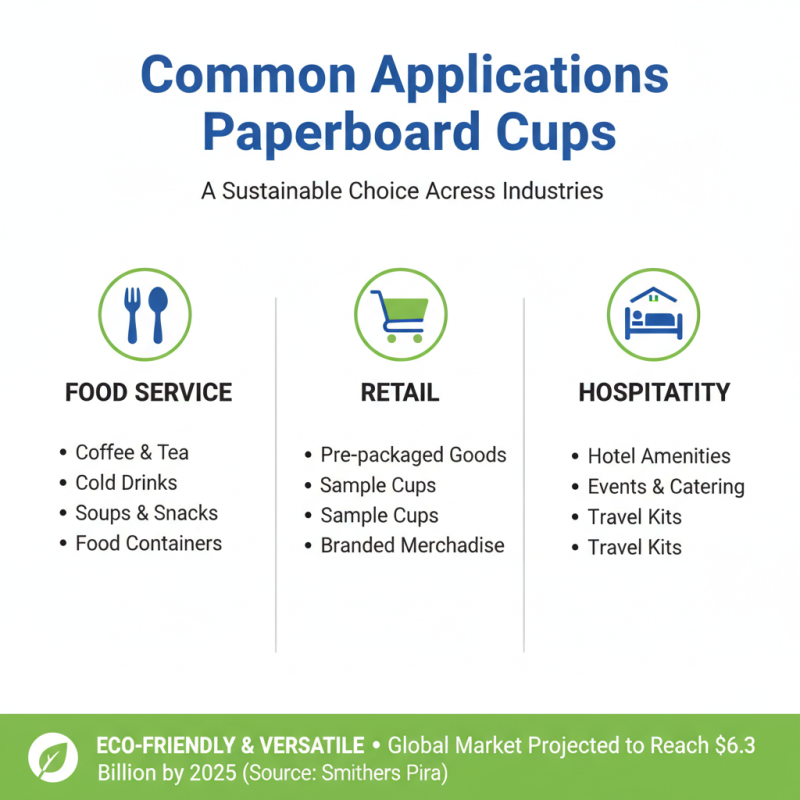
Paperboard cups have gained popularity across various industries due to their eco-friendly nature and versatility. According to a recent study by Smithers Pira, the global paper cup market is expected to reach $6.3 billion by 2025. This growth indicates a rising demand in sectors like food service, retail, and hospitality.
In the food service industry, paperboard cups are widely used for hot and cold beverages. They are lightweight, which reduces transportation costs. Additionally, their ability to keep drinks insulated makes them ideal for coffee shops and cafes. In the retail sector, brands prefer paperboard cups for takeout options, aligning with consumer preferences for sustainable packaging. In the hospitality industry, these cups are often found in hotels and events, offering convenience without compromising on style.
Despite their benefits, there are challenges to consider. Not all paperboard cups are created equal. Differences in coating and material quality can affect the cups' recyclability. Furthermore, the rapid increase in production raises concerns about sourcing sustainable materials. It is essential for businesses to seek reliable suppliers who prioritize eco-friendly practices in their manufacturing. Balancing quality and sustainability remains a critical area for improvement.