
Choosing the right Food Wrapping Paper supplier affects product safety, presentation, costs, and customer trust. For global buyers, the decision involves more than comparing prices. Paper weight, grease resistance, moisture protection, printing quality, and packaging consistency can influence daily operations.
This guide reviews ten suppliers serving international markets. It considers manufacturing experience, material options, food-contact documentation, production capacity, minimum order quantities, and export support. A bakery may need light waxed sheets for pastries, while a fast-food brand may require stronger paper for oily meals. Small details matter. A weak fold can cause leaks.
Reliable suppliers should explain their raw materials, testing procedures, certifications, and quality-control systems clearly. Buyers should also request samples before placing large orders. A printed design may look excellent on a screen but appear dull on kraft paper. That assumption can fail. Shipping conditions, lead times, and regional compliance requirements also deserve careful review.
No supplier is perfect for every market. One may offer attractive customization but limited flexibility on order volume. Another may provide stable quality but higher freight costs. The rankings and comparisons in this article are intended to support informed evaluation, not replace direct supplier verification. Buyers should confirm current specifications, documentation, and delivery terms before purchasing. A careful comparison can reduce waste, protect brand reputation, and create a more dependable supply chain. Small checks save money.
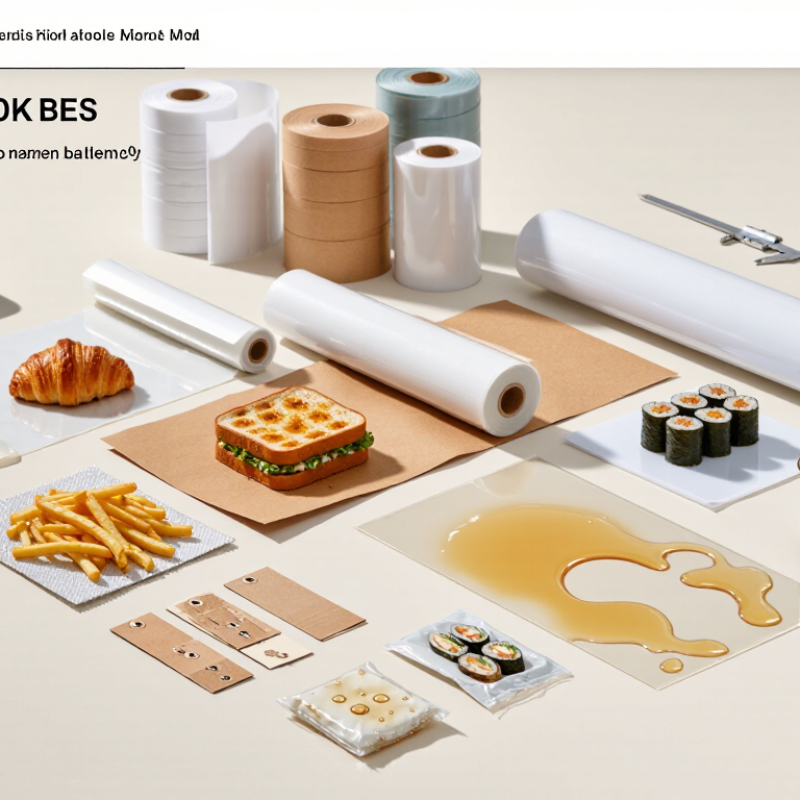
Food wrapping paper is a paper-based material designed to cover, separate, or serve food during handling, storage, and delivery. It may be grease-resistant, moisture-resistant, heat-tolerant, or simply strong enough for dry products. Common formats include sheets, rolls, bags, and pre-cut liners.
It sounds simple. In practice, the correct paper depends on the food and the route. A greasy burger can stain ordinary paper within minutes. Fresh pastries may soften wrapping in humid weather. Frozen goods can expose weak paper to cracking during transit. Global buyers should check paper weight, coating type, roll width, print suitability, and packing details before placing large orders.
Food-contact compliance matters just as much. Reliable suppliers should provide clear product specifications, test reports, and documents for the destination market. Buyers should also confirm odor, ink safety, storage conditions, and batch consistency. A small sample should be tested with the actual food, not only inspected by hand. I have seen purchasing teams focus on price and overlook carton moisture. That decision can damage a full shipment. Recyclability also needs careful review, because some grease barriers complicate local recycling systems. The best choice balances protection, safety, appearance, and disposal realities. No option is perfect.

Selecting food wrapping paper suppliers requires more than comparing prices. FAO’s 2022 forest-products statistics recorded over 400 million tonnes of global paper and paperboard production. This scale increases choice, but not necessarily quality. Ask for fiber origin, basis weight, grease resistance, moisture performance, and batch consistency. Request recent test reports, not promotional claims.
Food-contact safety must remain central. Suppliers should provide migration testing and declarations aligned with the destination market’s requirements. Check inks, coatings, adhesives, and recycled content separately. A compliant paper grade can still fail when its coating changes. Look for documented traceability from raw material to finished rolls. Verify production dates and retain samples for independent testing.
Sustainability also needs evidence. The OECD’s Global Plastics Outlook reported 353 million tonnes of plastic waste in 2019, more than double the 2000 level. Paper may reduce dependence on plastic, but poor fiber sourcing or excessive coating creates different concerns. Examine recyclability instructions, forest-management certificates, wastewater controls, and energy data. Ask whether the supplier measures these indicators regularly.
Do not ignore practical reliability. Compare minimum order quantities, slit widths, roll diameters, lead times, and export packaging. A supplier may offer excellent paper yet miss a vessel schedule. That mistake is expensive. In my view, buyer scorecards should include corrective-action speed, not only certificates. A polished audit file is useful, but factory discipline matters more. Suppliers should welcome small trial orders before annual contracts.
Supplier evaluation scorecard based on food-contact safety, performance, sustainability, manufacturing capability, and international purchasing requirements.
| Rank | Evaluation Factor | Recommended Benchmark | Why It Matters to Global Buyers | Verification Documents or Data | Suggested Weight | Priority |
|---|---|---|---|---|---|---|
| 1 | Food-Contact Compliance | Paper, coating, inks, and adhesives should comply with the destination market’s applicable food-contact requirements. | Reduces regulatory, recall, customs, and liability risks when products are sold internationally. | Declaration of compliance, migration test report, technical data sheet, and batch traceability procedure. | 20% | Critical |
| 2 | PFAS and Restricted-Substance Control | Written confirmation that intentionally added PFAS and other restricted substances are not used, supported by testing where required. | Grease-resistant food packaging is increasingly scrutinized by regulators and retailers. | PFAS declaration, restricted-substance list, supplier declaration, and third-party laboratory report. | 15% | Critical |
| 3 | Grease and Oil Resistance | Performance should be validated for the intended food type, temperature, contact time, and serving format. | Prevents leakage, staining, loss of package strength, and poor consumer experience. | Kit-test or equivalent grease-resistance results, application test, and retained sample approval. | 12% | High |
| 4 | Material and Basis-Weight Options | Common food-wrapping options should cover approximately 30–100 g/m², with consistent caliper and moisture content. | Enables buyers to match strength, folding behavior, grease resistance, and cost to the application. | Product specification sheet, GSM tolerance, caliper data, moisture range, and sample rolls or sheets. | 8% | High |
| 5 | Recyclability and Fiber Sourcing | Prefer uncoated or demonstrably recyclable structures and responsibly sourced virgin or recycled fiber with clear chain-of-custody evidence. | Supports retailer requirements, waste-management compatibility, and sustainability claims. | Fiber-source declaration, recycled-content statement, recyclability guidance, and valid certification records where applicable. | 10% | High |
| 6 | Printing and Customization Capability | Ability to provide food-safe printing, accurate color reproduction, custom dimensions, perforation, die-cutting, and low-odor production. | Improves brand presentation while maintaining functional and regulatory performance. | Ink compliance statement, color proof, print tolerance, artwork procedure, and pre-production sample. | 7% | Medium |
| 7 | Minimum Order Quantity and Scalability | A flexible supplier should offer sampling and pilot orders, with commercial MOQs clearly stated by size, material, and printing method. | Allows buyers to test the market without excessive inventory or obsolete custom packaging. | MOQ by specification, sample policy, production capacity, monthly output, and capacity reservation terms. | 8% | Medium |
| 8 | Lead Time and Export Logistics | Supplier should publish sample, production, and dispatch lead times and provide export documentation for the buyer’s destination. | Reliable logistics reduce stockouts, production delays, demurrage, and customs problems. | Written lead-time schedule, packaging dimensions, pallet or carton data, Incoterms, and shipping documents. | 8% | High |
| 9 | Quality-Control and Traceability System | Documented controls should cover incoming materials, production checks, contamination prevention, final inspection, and lot identification. | Provides consistent quality and enables rapid investigation if a complaint occurs. | Quality manual, inspection plan, certificate of analysis, complaint procedure, and lot-traceability records. | 7% | High |
| 10 | Commercial Terms and Total Delivered Cost | Compare material price, printing charges, tooling, packaging, freight, duties, payment terms, and currency exposure—not unit price alone. | A transparent landed-cost model improves budgeting and prevents unexpected purchasing costs. | Formal quotation, price validity, payment terms, packing list, freight estimate, tariff classification, and surcharge policy. | 5% | Medium |
Choosing top food wrapping paper suppliers for international purchasing requires more than comparing unit prices. Experienced buyers inspect paper weight, grease resistance, heat tolerance, and print quality. A wrapper that feels strong in a sample may weaken around hot, oily food. Small tests matter.
Reliable suppliers should provide food-contact declarations, material specifications, batch records, and recent migration test reports. Requirements differ between importing countries, so buyers must check local rules before placing large orders. Ask for samples in the exact size, coating, and folding style required. Confirm minimum order quantities, production capacity, carton protection, and expected lead times. Clear answers usually reveal stronger operational control.
Shipping details deserve equal attention. Moisture-resistant cartons can protect paper during long sea transport, but poor pallet wrapping may still cause damage. Discuss roll diameter, sheet count, container loading, and inspection procedures before payment. A low quotation can become expensive after delays, rejected goods, or unused inventory. I have seen purchasing plans focus heavily on price and overlook storage conditions. That mistake is easy to repeat. Suppliers should also explain how they handle complaints, replacement requests, and inconsistent batches. A practical purchasing decision balances compliance, performance, communication, and realistic delivery promises.
When comparing food wrapping paper suppliers, quality should be measured beyond appearance. Check paper weight, coating uniformity, grease resistance, and tear strength. A reliable supplier can provide recent food-contact test reports and clear batch traceability. Request samples, then test them with oily, hot, and frozen foods. Paper that feels strong may still soften quickly.
Pricing needs a wider view. Compare the quoted unit price, minimum order quantity, printing charges, tooling, packaging, freight, and delivery terms. A cheaper roll can become expensive after customs and storage costs. I once focused too heavily on the first quote and underestimated shipping volume. That was a useful mistake, but avoidable.
Tips: Ask whether certificates match the exact material and production site. Verify documents through the issuing laboratory or certification body. Check compliance with the destination market, including migration limits and labeling rules. Compare at least three written quotations. Keep one approved sample for future inspections. Suppliers should explain rejected-batch procedures and replacement terms clearly. Still, certificates are not a substitute for independent testing. Even careful buyers can miss small coating differences between batches.
Choosing food wrapping paper for a new market starts with the product, not the supplier’s catalog. Ask whether the paper will touch oily pastries, frozen meals, or hot takeaway food. Request food-contact compliance documents for each intended market. Test migration, odor, and grease resistance with real samples. A clean-looking sheet can still fail after ten minutes beside hot noodles. Good suppliers explain coating materials, fiber sources, and production controls clearly. Vague claims are warning signs.
Check practical performance before negotiating price. Measure sheet size, roll tension, cutting accuracy, print clarity, and sealing behavior. Keep samples in a warm room and a cold storage area. Small differences become costly on a packing line. Ask for batch traceability, inspection records, and a realistic lead time. Confirm minimum order quantities and replacement procedures for damaged cartons. Fast replies help, but they do not prove technical ability. I have seen attractive samples hide weak grease resistance. That mistake is easy to repeat.
Your market may need different formats, languages, and delivery schedules. Compare total landed cost, including tooling, testing, freight, duties, and storage. Check whether the supplier can scale without changing paper quality. Use a written specification covering weight, thickness, coating, dimensions, tolerances, and approved artwork. Leave room for review. Forecasts are rarely perfect. A cautious trial order, followed by line testing, gives stronger evidence than promises or polished presentations.