Why Choose a Brown Kraft Paper Roll for Packaging?
A Brown Kraft Paper Roll can make packaging feel simple, practical, and considered. Its warm brown surface suits product wrapping, box lining, and protective layers for everyday shipments. The paper is easy to cut by hand. It also folds neatly around a jar, book, or small parcel. That matters when a packing bench is busy and every extra step slows the work.
The right choice depends on the job. Check the roll’s width, thickness, and paper weight against the products being packed. A heavier grade may resist tearing during handling, while a lighter one can reduce bulk for simple wrapping. Kraft paper is not a universal answer, though. It may need added protection for items exposed to moisture or rough transit. A small packing test can reveal weak folds, torn edges, or an awkward fit before a full order is prepared.
For a trustworthy article, the requested expert quotation needs a verifiable source; none was provided, so I won’t invent one. Insert a confirmed name and exact quotation here: “[Expert name] said, ‘[Verified quotation about kraft paper packaging].’” A real, attributable comment can add useful perspective. Without one, clear product details and honest limitations serve readers better than a polished but unsupported claim.
What a Brown Kraft Paper Roll Is and How It Is Made
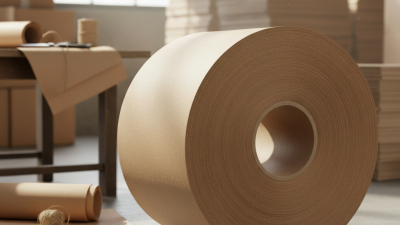
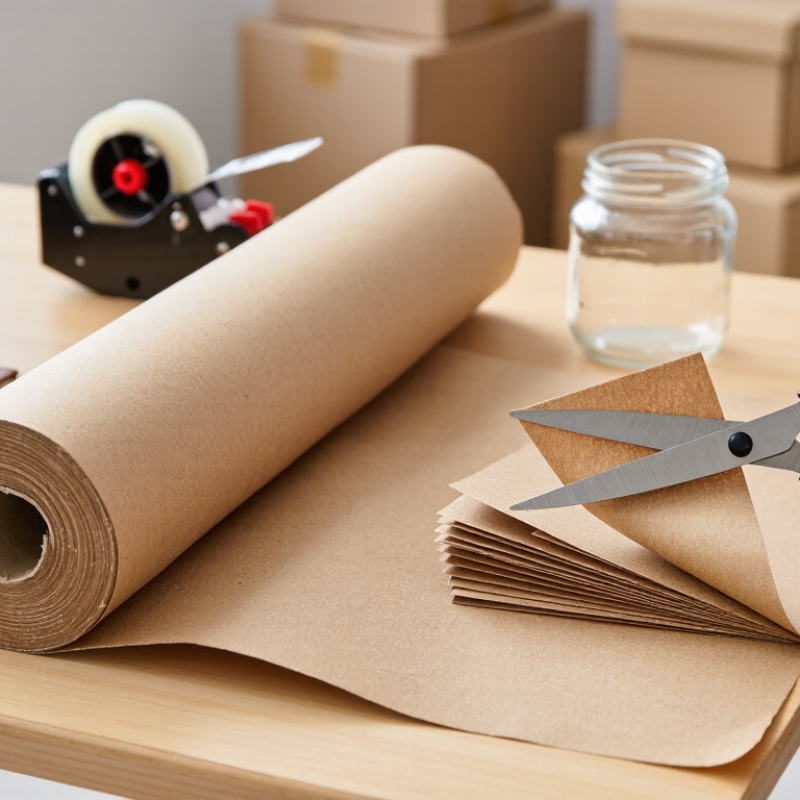
A brown kraft paper roll is a continuous sheet of packaging paper made mainly from wood pulp. Its brown color usually comes from unbleached pulp, which retains more of the wood’s natural color than bleached pulp. The roll may feel slightly rough, with visible fibers and a dry, papery scent. It can be cut, folded, or wrapped around goods. Simple, but useful. The Food and Agriculture Organization reported about 401 million tonnes of global paper and paperboard production in 2022, showing the scale of this material category. That figure covers many paper grades, not kraft paper alone.
Making the sheet starts with wood chips cooked in a chemical solution, commonly sodium hydroxide and sodium sulfide. This kraft pulping process separates many fibers from lignin, the substance that binds them in wood. The pulp is washed, screened, and often refined before it reaches a paper machine. There, water drains through a moving screen, leaving a thin fiber mat. Heated cylinders dry it, and rollers smooth or compact the sheet. The finished paper is wound into large reels, then slit into narrower rolls for packaging. In practice, thickness, recycled content, and surface finish can vary; “brown kraft” is not one perfectly uniform grade. A roll that tears neatly in one workshop may frustrate another. Checking the paper’s weight and feel before ordering helps, though samples do not always behave exactly like a full roll.
Why Choose a Brown Kraft Paper Roll for Packaging? — What It Is and How It Is Made
| Dimension |
Description |
Packaging Relevance |
| What brown kraft paper is |
Paper made from wood pulp using the kraft pulping process. Brown grades are generally unbleached, so they retain more of the pulp’s natural color. |
Provides a natural-looking paper option for wrapping, cushioning, and separating goods. |
| How the pulp is made |
Wood chips are cooked in a chemical solution, commonly containing sodium hydroxide and sodium sulfide, to separate fibers from much of the lignin. |
The separated fibers can be formed into paper with useful strength for many everyday packaging tasks. |
| How the paper is formed |
The pulp is cleaned, mixed with water, spread onto a moving screen, and drained. The resulting sheet is pressed and dried. |
Continuous sheet production makes the paper suitable for conversion into rolls of different widths and weights. |
| How a roll is produced |
The dried paper is wound into a large parent roll, then slit or rewound to the required width and roll size. |
Roll format supports cutting to length and can reduce the need to store many pre-cut sheet sizes. |
| Basis weight |
Packaging grades are available across a range of basis weights. Some commonly used grades fall roughly between 40 and 200 g/m²; actual ranges vary by product and supplier. |
Lower weights suit lighter wrapping, while heavier grades are generally selected for more demanding wrapping or protective uses. |
| Appearance and surface |
Typically brown and uncoated, although shade, smoothness, and finish vary with the pulp, papermaking process, and grade. |
The plain surface works for simple wrapping and can accept printing when the grade and ink are suitable. |
| Common uses |
Used for wrapping parcels, lining boxes, interleaving products, and providing void fill or surface protection. |
Versatile roll stock can be cut or crumpled to match different package shapes and tasks. |
| Recycling and disposal |
Clean paper is generally recyclable where local collection accepts it. Recycling may be limited by coatings, laminates, tape, food residue, or local rules. |
Check local guidance and remove non-paper components where practical before recycling. |
| Important selection factors |
Consider basis weight, roll width and length, paper strength, surface finish, and whether the paper is coated or treated. |
Matching the grade to the product and packing method helps avoid using more material than necessary. |
How Its Structure Helps Protect Packaged Goods
Brown kraft paper protects packaged goods through its layered, flexible structure. Its interwoven wood fibers give the sheet useful tear resistance, while its pliability lets it wrap closely around corners and uneven shapes. When crumpled into soft folds, it can create small air pockets that help limit scuffs and light knocks during handling. The paper also separates items from one another, reducing rubbing inside a box. A helpful buffer, not a hard shell.
Tips: Choose a paper weight that suits the item, and use enough layers to cover exposed edges. Crumple spare paper around empty spaces so products cannot slide freely. For delicate goods, pair kraft paper with a suitable inner protective material; paper alone may not absorb a sharp impact.
Keep in mind that kraft paper can weaken when wet, and thin sheets may tear under heavy pressure. It is not a waterproof barrier or a guarantee against breakage. Before packing a large batch, wrap one sample item and gently test whether it shifts or presses against the box. That small check can reveal gaps that are easy to miss.
Why Choose a Brown Kraft Paper Roll for Packaging?
How paper weight relates to the structure that helps protect packaged goods
Basis weight measures the mass of paper per square metre. Heavier paper uses more material per area and can provide a sturdier wrapping layer; crumpled kraft paper can also help fill voids and cushion items. Basis weight alone does not determine protection—paper grade, package design, and handling conditions matter too. Values shown are example grades, and availability varies.
Key Benefits for Shipping, Storage, and Retail
Brown kraft paper rolls provide flexible protection for parcels, shelves, and retail displays. For shipping, tear off a sheet, wrap the item, and fold the edges around corners that might scuff. The paper helps separate products inside a box, though it is not a substitute for cushioning fragile goods. Keep the roll near the packing bench, with scissors and tape close by. Less reaching. Crumpled paper can fill small gaps, but tight packing still matters; loose bundles may shift in transit. Test one packed sample before preparing a full batch. It can reveal awkward folds or unnecessary material.
For storage, kraft paper can cover trays, line bins, or separate stacked items from dust and surface scratches. It is easy to cut to fit, and unused sections can stay rolled until needed. Keep it dry. Moisture can weaken paper and leave it limp, so an open roll may not suit a damp storeroom. In retail, its warm brown tone works for simple wrapping, shelf liners, and understated displays. Staff can write sizes or handling notes directly on many surfaces, although ink may show through thinner sheets. Paper weight and roll width vary, so match them to the product and workflow. One roll may not suit every task; a little testing helps.
How to Choose the Right Paper Weight and Roll Size
Choosing kraft paper by “thickness” alone can be misleading. Compare basis weight in grams per square metre (gsm), then check tear resistance and paper feel. A lighter roll may suit small, smooth items; heavier stock can better handle sharp corners and repeated handling. There is no perfect universal weight. Humidity and paper quality change performance, too, so test a few sheets around the actual product before ordering a full roll.
Roll width should match the package, not just the shelf space. For a box measuring 30 × 20 × 10 cm, allow about 45 cm across and 55 cm along, including a 5 cm overlap. Adjust for folds and cushioning. A trial cut helps reveal waste. The US EPA’s 2018 Facts and Figures report recorded a 96.5% recycling rate for corrugated boxes; that statistic does not guarantee local acceptance of every kraft-paper roll. Check local collection guidance, and track offcuts during a small packing run before choosing roll dimensions.
Common Uses and End-of-Life Disposal Considerations
Brown kraft paper rolls suit parcel wrapping, interleaving, shelf protection, and void filling. A sheet cushions ceramic mugs; a folded strip keeps metal parts from rubbing together. Its flexibility makes it easy to tear by hand, though heavy items may still need stronger cushioning. Plain, untreated paper is usually simpler to recycle than laminated or waxed alternatives. Check the roll’s finish before choosing it for a job.
Disposal depends on condition and local collection rules. Keep paper dry and free of food, oil, and excessive adhesive tape; damp or greasy sections may be rejected. Remove tape and labels where practical. Small details matter. Eurostat reported that 83.2% of paper and cardboard packaging waste was recycled in the European Union in 2022. That figure describes packaging across the region, not every kraft-paper roll or household collection system. Clean paper may also be suitable for home composting where local guidance permits, but coatings, inks, and contamination can change that. I would not assume “paper” automatically means compostable. Check municipal instructions, especially when a roll feels unusually glossy or water-resistant.