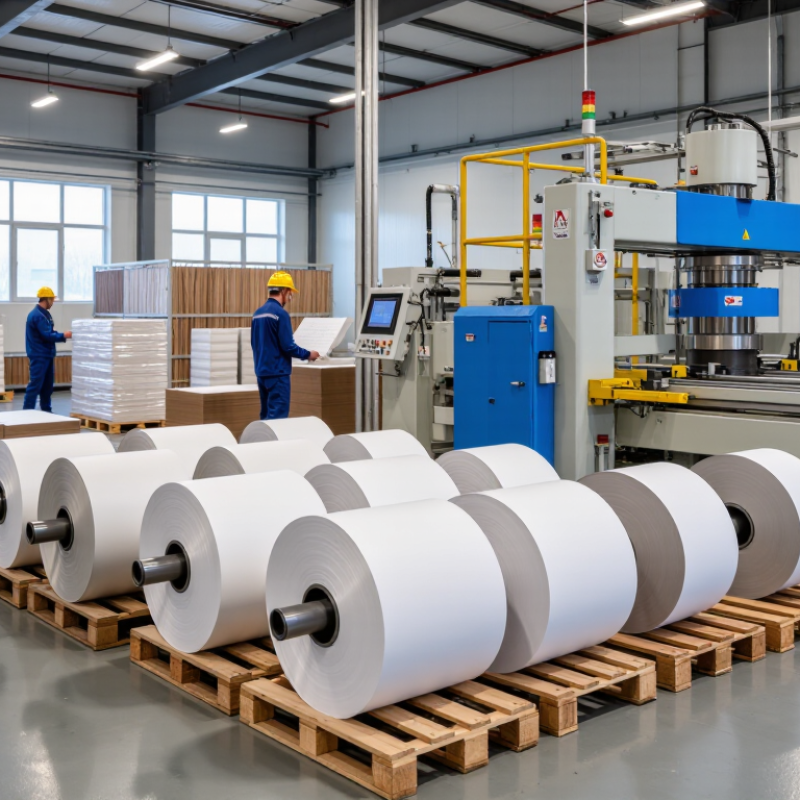
Choosing reliable paper board suppliers can shape product quality, packaging performance, and long-term purchasing costs. For global buyers, the right partner must offer more than attractive quotations. They should provide consistent grades, stable production, clear documentation, and dependable shipping support. This guide introduces China’s leading Paper Board suppliers and examines what makes them suitable for international procurement.
Experienced buyers often inspect board thickness, moisture resistance, surface smoothness, and cutting accuracy. A sample may look excellent under showroom lighting but perform differently during printing or folding. Supplier audits, factory visits, and third-party testing can reveal important details. Production capacity also matters when seasonal demand increases or urgent orders appear. Reliable manufacturers usually explain their raw materials, quality controls, packaging methods, and export experience without avoiding specific questions.
Details matter most.
Buyers should compare certifications, minimum order quantities, lead times, and communication practices. Environmental claims also require careful review, because broad statements may not prove responsible sourcing. Some suppliers may appear highly competitive, yet their documentation or after-sales support remains limited. That is an uncomfortable possibility, but it deserves attention. A practical sourcing decision balances price, technical performance, compliance, and supplier transparency. The following overview focuses on manufacturers with relevant industry experience, documented capabilities, and proven service for overseas customers. Information should still be verified directly before any purchase, since factory conditions, certifications, and product specifications can change. A thoughtful evaluation reduces surprises and supports stronger, more reliable packaging partnerships.
Chinese manufacturers supply several paper board types for different packaging and printing needs. Coated duplex board offers a smooth white surface for cartons, labels, and retail packaging. Ivory board, often called folding box board, provides better stiffness and clean printing for premium folding cartons. Kraft board has a natural brown appearance and suits shipping boxes, sleeves, and paper bags. Its surface may show slight color variation, which some buyers overlook.
Corrugated liner and fluting paper form protective shipping cases. The liner provides the outer surface, while fluting creates cushioning strength. Grey board is thicker and commonly used for book covers, rigid boxes, and display structures. Food-contact paperboard may also be available, but buyers should verify migration tests, coatings, and destination-market requirements. Specifications can differ between mills.
Tips: Request physical samples before placing a large order. Check grammage, thickness, moisture, stiffness, brightness, and edge quality. Ask for recent test reports and confirm whether recycled fibers are used. A sample may perform well in dry weather but weaken during ocean transport. This is easy to miss. Also review packing methods, pallet protection, and production tolerances. My practical view is simple: the cheapest board is rarely the lowest-cost choice after printing loss, warping, or rejected cartons.
China Top Paper Board Suppliers for Global Buyers
China’s paper board supply network is concentrated in several practical manufacturing regions. Guangdong, especially the Pearl River Delta, serves export packaging and fast-moving consumer goods. Suppliers there often work close to ports, printing houses, and carton converters. Zhejiang has strong paper-making and packaging clusters around Ningbo, Hangzhou, and Jiaxing. These areas support coated board, folding boxboard, and specialty grades. Jiangsu offers large-scale production, technical processing, and convenient logistics near Shanghai. Shandong is important for pulp, kraft board, and industrial packaging materials.
Tips: Ask for mill location, board grade, GSM tolerance, moisture range, and test reports. Request samples from the actual production line. Confirm pallet design before shipment. A factory address alone proves little.
In my sourcing experience, regional proximity can reduce lead times and simplify quality checks. However, a nearby port does not guarantee better service. Production capacity, export experience, and coating consistency still matter. Buyers should compare suppliers by measurable data, not polished catalogs. Check edge condition, curl, surface smoothness, and compression strength during inspection. A low quotation may hide weaker fibers or unstable moisture control. That mistake is expensive. Even experienced buyers sometimes overlook seasonal production pressure. I would allow extra time before major holiday closures and confirm every specification in writing.
China Top Paper Board Suppliers for Global Buyers
Quality Standards for Export-Ready Paper Board
Export-ready paper board must perform consistently, not only look bright in a sample book. Buyers should check grammage, thickness, moisture, surface smoothness, and dimensional stability. These figures affect printing, folding, die-cutting, and final packaging. A reliable supplier provides batch test reports and clear tolerance ranges. Useful checks include Cobb water absorption, burst strength, tensile strength, and stiffness. The acceptable result depends on the board’s intended use and destination climate.
Tips: Request samples from different production batches. Measure them after 24 hours in your working environment. Inspect the sheet edges, coating uniformity, and curl. Ask how pallets are wrapped against humidity during sea transport. Export documents should match the actual product specifications. Small mismatches can become expensive claims.
Practical inspections often reveal an uncomfortable truth: a perfect sample may not represent full production. That is why pre-shipment testing matters. An independent laboratory can verify moisture, basis weight, and strength before loading. Suppliers should also explain their quality-control process, calibration records, and complaint procedure. Look for traceable batch numbers on cartons and inspection records. Certifications can support credibility, but they do not replace physical testing. Paper board may pass one test and still fail during high-speed printing. Keep reviewing the standard. No checklist is perfect.
Typical Basis-Weight Ranges for Export-Ready Paper Board
Basis weight is a core export quality parameter measured according to ISO 536. The ranges shown are common commercial specifications; exact limits depend on the board grade, end use, converting process, and buyer requirements. Moisture, Cobb water absorptiveness, brightness, strength, and dimensional stability should also be verified before shipment.
Global buyers evaluate Chinese paper board suppliers through evidence, not polished catalogues. A serious review begins with product samples, factory records, and clear communication. Buyers often compare GSM, caliper, moisture content, stiffness, brightness, and surface smoothness. These figures must match independent test results. A sample may look excellent under showroom lighting, yet fail during folding or printing.
Factory experience also matters. Buyers may request production photos, quality-control procedures, and recent export references. A reliable supplier should explain raw material sources, coating processes, inspection points, and packaging methods. Trial orders reveal more than promises. Check whether each pallet has labels, moisture protection, and consistent sheet dimensions. Ask for a realistic lead time, not an attractive one. Delayed shipments can disrupt printing schedules and warehouse planning.
Cost remains important, but the lowest quotation deserves careful questioning. Compare the full landed cost, including packaging, transport, inspection, and possible waste. Confirm payment terms, product tolerances, complaint procedures, and replacement policies in writing. Certifications can support credibility, but buyers should verify their scope and validity. No supplier is flawless. Even experienced factories may overlook edge damage or uneven coating in a busy season. I would keep a retained sample from every shipment and record performance after printing. That small habit has exposed differences that initial inspections missed. Clear answers matter more than confident language.
| Evaluation Dimension | Relevant Data or Benchmark | What Global Buyers Usually Verify | Why It Matters |
|---|---|---|---|
| Paperboard Grade and Application | Common product categories include folding boxboard, coated white board, kraft back board, recycled grey board, food-contact board, and specialty board. Typical commercial basis weights may range from approximately 180 to 600 g/m², depending on the grade and end use. | Technical data sheet, intended application, coating structure, fiber composition, and approved end-use declaration. | The correct grade affects print quality, stiffness, converting performance, packaging strength, and regulatory suitability. |
| Basis Weight Accuracy | Basis weight is normally expressed in grams per square metre (g/m²) and is tested according to ISO 536. The agreed customer specification and tolerance should be stated on the purchase order. | Pre-shipment test report, retained samples, laboratory measurement, and comparison with the approved specification. | Inconsistent basis weight can change sheet stiffness, caliper, yield, packing weight, and printing behavior. |
| Caliper and Stiffness | Thickness is commonly reported in micrometres and may be measured according to ISO 534. Stiffness depends on basis weight, fiber type, moisture, coating, and board structure. | Caliper report, bending-stiffness data, sample carton trials, and performance testing under the buyer’s converting conditions. | Higher caliper or stiffness can improve carton forming, stacking strength, and product protection, but may affect folding and cutting. |
| Moisture Control | Paper and paperboard moisture is commonly tested according to ISO 287. A frequently used commercial target for many paper products is approximately 4% to 8%, but the correct range depends on grade, climate, and application. | Moisture test results, packaging method, container loading records, and acclimatization instructions. | Excessive or uneven moisture can cause curl, dimensional change, poor feeding, cracking, and unstable converting performance. |
| Surface and Printability | Important properties include smoothness, formation, opacity, brightness, gloss, ink holdout, and coating uniformity. Brightness may be measured using ISO 2470-1 or another agreed test method. | Printed trial sheets, surface test results, color-control records, and compatibility testing with offset, flexographic, or digital printing. | Stable surface quality reduces print defects such as mottling, pinholes, uneven ink absorption, and color variation. |
| Dimensional Stability | Board performance is influenced by grain direction, relative humidity, moisture content, coating structure, and storage conditions. No single dimensional-stability value applies to every grade. | Cross-direction and machine-direction samples, humidity conditioning, curl testing, and trial production at the buyer’s facility. | Dimensional instability can lead to registration problems, inaccurate die-cutting, carton deformation, and feeding interruptions. |
| Food-Contact Compliance | For food packaging, compliance depends on the destination market and the complete material structure, including board, coatings, inks, adhesives, and functional barriers. | Declaration of compliance, migration test results, restricted-substance information, traceability records, and applicable destination-market documentation. | Food-contact documentation reduces regulatory, recall, and customer-approval risks. |
| Recycled and Fiber Content | Recycled content, virgin fiber content, and mill process information should be stated as specific percentages or material descriptions rather than general environmental claims. | Material composition statement, chain-of-custody documents where applicable, recycled-content evidence, and product specification. | Verified fiber information supports sustainability reporting and helps buyers meet customer or regulatory requirements. |
| Product Consistency | Consistency should be evaluated across basis weight, caliper, moisture, brightness, shade, stiffness, surface defects, and roll or sheet dimensions. | Control plans, batch records, certificate of analysis, retained samples, and results from multiple production lots. | Consistent production is essential for repeat orders, automated converting, stable printing, and reduced production waste. |
| Sheet and Roll Dimensions | Common order details include sheet length, sheet width, roll width, core diameter, winding direction, pallet configuration, and maximum load height. | Approved packing specification, dimensional inspection report, pallet photographs, and loading-plan confirmation. | Accurate dimensions improve warehouse utilization, machine compatibility, container loading, and handling safety. |
| Packaging and Export Protection | Export packaging commonly uses moisture-resistant wrapping, edge protection, pallets or reels, corner protection, and clear product identification. The exact configuration should match the transport route and climate. | Packaging specification, drop or handling assessment where required, container-loading photos, and shipping marks. | Suitable packaging helps prevent moisture damage, edge crush, contamination, deformation, and mixed-lot errors during international transport. |
| Quality Inspection System | A documented inspection system should define incoming-material checks, in-process controls, final inspection, sampling level, nonconformity handling, and corrective action. | Quality manual, inspection checklist, calibration records, test-laboratory capability, and corrective-action reports. | A verifiable system is more reliable than relying only on a product sample or sales quotation. |
| Production Capacity and Lead Time | Capacity should be assessed by relevant grade, basis weight, machine width, monthly output, available production slots, and realistic lead time rather than by total mill capacity alone. | Production schedule, capacity statement, order history, equipment list, and written confirmation of peak-season lead times. | Grade-specific capacity and dependable scheduling reduce supply interruptions and missed packaging-production deadlines. |
| Minimum Order Quantity | Minimum order quantity can vary according to grade, sheet size, color, coating, reel width, custom packaging, and production setup requirements. | Formal quotation showing minimum quantity, setup charges, mixed-container rules, and sample-order conditions. | MOQ directly affects inventory investment, trial-order feasibility, and the total landed cost for new buyers. |
| Landed-Cost Transparency | Total cost should distinguish product price, packaging, inland transport, export documentation, freight, insurance, duties, taxes, and destination handling charges. | Comparable quotations under the same Incoterm, port, currency, payment terms, and shipment assumptions. | A low quoted unit price may not represent the lowest total cost after logistics, inspection, waste, and import charges. |
| Supply-Chain Traceability | Traceability should connect the shipment to the production lot, raw-material records, test results, packing records, and shipping documents. | Lot numbering, certificates of analysis, production dates, pallet labels, and documented recall or complaint procedures. | Traceability enables faster investigation and containment if quality or compliance issues arise. |
| Communication and Documentation | Essential documents include technical data sheets, quotation, order confirmation, packing list, commercial invoice, certificate of origin where required, inspection report, and shipping documents. | Document samples, response time during technical clarification, change-control procedure, and consistency between documents. | Clear documentation lowers the risk of specification misunderstandings, customs delays, and incorrect production planning. |
| Pre-Shipment Verification | For higher-value or specification-sensitive orders, inspection may include quantity, dimensions, basis weight, caliper, moisture, appearance, packaging, and shipping marks. | Independent inspection report, buyer-approved sampling plan, photographs, sealed samples, and release procedure. | Verification before shipment is generally less costly than resolving a nonconforming shipment after arrival. |
| After-Sales Corrective Action | A professional supplier should have a defined process for complaint registration, root-cause analysis, corrective action, replacement or credit evaluation, and preventive action. | Complaint procedure, response-time commitment, previous anonymized corrective-action examples, and agreed claim documentation. | Effective corrective action protects long-term supply continuity and reduces repeated defects. |

China’s paper board suppliers serve global buyers through a process that rewards clear specifications. Buyers should define board grade, thickness, sheet size, moisture range, coating, and packaging method before requesting quotations. A sample should be checked for stiffness, surface smoothness, edge quality, and print performance. Small details matter.
Export procedures usually include a commercial invoice, packing list, sales contract, and transport documents. Depending on the destination, certificates of origin or product compliance records may also be required. Buyers should agree on Incoterms, port responsibilities, inspection timing, and insurance before production starts. Confirm the shipping port carefully. A cheap inland route can create delays or extra handling charges.
Pricing depends on fiber type, recycled content, energy costs, order volume, sheet dimensions, coating, and currency movement. Freight rates may change quickly, especially during peak seasons. Ask whether the quotation includes export packing, documentation, pallet fees, and local transport. Payment terms also affect risk. A staged payment linked to inspection can provide better control than paying everything upfront. Still, inspection is not perfect. It may miss moisture problems that appear after long ocean transit. Buyers should therefore request moisture protection, batch records, and clear claims procedures. A supplier’s low price is useful only when quality remains consistent across repeated shipments.