Choosing among China’s top Food Wrapping Paper manufacturers in 2026 requires more than comparing prices or glossy catalogues. Buyers need to examine paper weight, grease resistance, print quality, sealing performance, and food-contact documentation. A wrapper may look attractive under showroom lights, yet soften beside hot noodles or tear around a frozen pastry.
Packaging educator Walter Soroka defines packaging as “the science, art, and technology of enclosing and protecting products for distribution, storage, sale, and use.” His words remain practical for today’s food businesses. Good Food Wrapping Paper must protect the product, support efficient packing, and communicate quality without creating unnecessary waste. It should also match the application, whether that means bakery bags, sandwich sheets, takeaway liners, burger wraps, or grease-resistant pouches.
This guide reviews leading Chinese manufacturers through a buyer’s perspective. It considers production experience, material control, customization ability, factory communication, testing records, and export support. Samples matter. So do small details, such as ink adhesion after refrigeration or the paper’s behavior when folded repeatedly. Some manufacturers present impressive certifications, but documentation still needs careful verification against the destination market’s requirements.
The “top” label is not absolute. A large factory may not suit a small café, and a low quotation can conceal higher converting costs. That is worth remembering. Supplier claims should be checked through samples, technical data, and clear purchase terms. This 2026 overview aims to make that comparison more practical, transparent, and grounded in real packaging decisions.

A leading food wrapping paper manufacturer in China offers more than attractive sheets and competitive pricing. It understands how paper behaves around oil, moisture, heat, and repeated handling. Experienced technical teams select suitable fibers, coatings, and barrier layers for each food application. They also consider printing performance, folding strength, and contact safety before production begins.
Quality evidence matters. Manufacturers should provide clear test reports, material specifications, and batch records from controlled production lines.
In practice, this means checking surface cleanliness, coating uniformity, odor, tensile strength, and grease resistance.
Samples should be tested under realistic conditions, such as holding warm fried food for several hours. Laboratory results alone can miss practical problems.
Traceability builds trust. A capable factory can identify raw material sources, production dates, inspection results, and shipment details without confusion.
Communication also reveals expertise. Technical staff should explain limitations instead of promising everything. No factory gets every detail right.
Packaging performance may change with humidity, storage time, or food temperature. Responsible manufacturers admit these variables and improve their process through customer feedback, internal audits, and repeat testing.
Their authority comes from documented experience, not impressive claims.
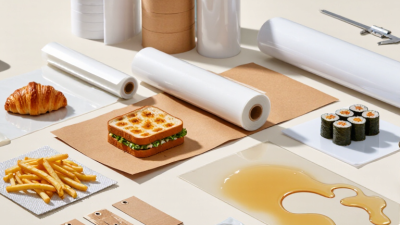
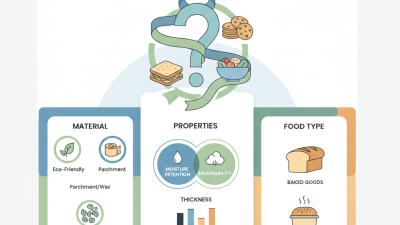
Food wrapping paper varies by barrier performance, strength, and cooking temperature. Kraft paper suits sandwiches, bakery bags, and takeaway wraps because it resists tearing during handling. Greaseproof paper limits oil migration around pastries, fried foods, and ready-to-eat snacks. Parchment paper performs better with heat, making it useful for baking trays, roasting, and steaming. Wax-coated paper adds moisture resistance for chilled foods, although it is less suitable for high-temperature cooking.
Paperboard wraps and folding cartons protect burgers, cakes, and portioned meals during delivery. According to Grand View Research’s paper packaging market report, the global market reached about USD 427.8 billion in 2023. Food service remains a major demand area. The Smithers report, The Future of Global Packaging to 2028, also identifies fiber-based formats as important growth materials. These figures describe paper packaging broadly, not wrapping paper alone. That distinction matters.
Tips: Match the paper to the food’s moisture, oil, and heat level. Test real products for leakage, tearing, and odor transfer. Check food-contact documentation before production. Recyclability can change after coatings, inks, or food residue are added. It looks simple, but it is not. The FAO estimates that roughly one-third of food produced globally is lost or wasted, so suitable wrapping may help protect quality, though paper alone cannot solve waste. Some “eco-friendly” choices still fail in oily or humid conditions.
Major Types of Food Wrapping Paper and Their Applications
The chart shows indicative commercial basis-weight ranges commonly used for food-wrapping grades. Actual specifications vary by application, coating, converting process, and food-contact requirements.
China’s food wrapping paper manufacturing begins with carefully selected fiber, often virgin pulp or responsibly sourced recycled content. Fibers are cleaned, refined, and formed into a wet web before drying under controlled heat. Moisture matters. Uneven drying can cause curling, weak seals, and poor printing. Experienced factories monitor basis weight, thickness, tensile strength, and surface smoothness during production.
Many papers receive a water-based coating for grease or moisture resistance. Some applications use dispersion coatings, wax alternatives, or laminated layers. The coating must remain stable during folding and contact with hot food. Printing usually follows with low-migration inks, controlled curing, and surface inspections. Slitting and rewinding require accurate tension, because loose edges may create dust or handling problems.
Material standards should cover more than appearance. Buyers should request food-contact declarations, composition records, migration test reports, and batch traceability. Testing may examine overall migration, specific substances, odor, grease resistance, and heat tolerance. Accredited laboratories can improve confidence, but documents still need careful review. A paper may pass one test and fail after storage, printing, or contact with oily food. That gap deserves attention. Suppliers should also verify recycled fiber controls, coating consistency, and packaging hygiene before shipment.
Evaluating food wrapping paper manufacturers requires more than comparing prices. Start with material specifications, including paper grade, coating type, thickness, grease resistance, and heat tolerance. Ask for recent food-contact test reports from qualified laboratories. Confirm that testing matches the destination market and intended food use.
Request production samples, not only catalog photographs. Check surface smoothness, folding performance, odor, ink adhesion, and cutting accuracy. A practical trial with oily pastries or warm sandwiches can reveal weaknesses quickly. Review factory controls for incoming materials, coating weight, printing quality, and final packing. Reliable suppliers should explain batch tracking and provide clear corrective-action records.
Visit the facility when possible, or arrange a live video inspection. Observe storage conditions, cleanliness, equipment maintenance, and worker procedures. Ask about production capacity during peak seasons, minimum order quantities, lead times, and export documentation. Experienced manufacturers usually answer with measurable details rather than broad promises. A polished website proves little.
Cost still matters, but unusually low prices deserve careful questions. Recycled content, coatings, and customized printing can change performance and compliance risks. I would also compare sample results from several production batches, because one good sample may not represent normal output. That step takes time. It can prevent expensive packaging failures later.
Reliable communication is another useful test. Notice whether the supplier records specifications accurately and reports limitations honestly. No factory is perfect. The stronger partner is usually the one that identifies problems early and offers evidence-based solutions.
China’s food wrapping paper market is moving toward fiber-based materials with clearer environmental credentials. In 2026, manufacturers are prioritizing recyclable kraft paper, water-based coatings, and lighter structures. The change is visible in takeaway cartons, bakery bags, and paper wraps used for fresh produce. Many buyers now request fiber certification, coating data, and migration test reports before approving a supplier.
Traceability Traceability is becoming a practical requirement, not just a marketing phrase. Production teams are recording pulp sources, coating batches, and printing conditions through digital systems. This helps reduce defects such as uneven grease resistance or ink transfer. Smaller orders are also becoming easier to manage through improved flexographic printing and automated cutting. However, automation does not remove every weakness. Some factories still struggle with stable quality during humid summer conditions.
Food safety remains central to purchasing decisions. Experienced manufacturers are testing odor, heat resistance, seal strength, and contact safety under realistic packaging conditions. They are also adjusting paper thickness to reduce material use without causing leakage. Compostable coatings attract attention, but their performance can vary across food types and disposal systems. That limitation deserves more honest discussion. A package may look sustainable while lacking suitable local recovery facilities. In 2026, reliable suppliers will need practical test evidence, consistent production control, and clearer communication about what their paper can actually achieve.