

China’s Printing Paper industry serves publishers, packaging converters, commercial printers, schools, and offices worldwide. Choosing the best manufacturer requires more than comparing prices. Buyers must examine paper grade, fiber sources, coating quality, moisture control, and delivery consistency. A bright sheet may look impressive under showroom lighting. It may still curl during high-speed printing.
The China Paper Association reported that China produced more than 129 million tonnes of paper and paperboard in 2023. Its annual industry statistics also show strong domestic demand and continuing pressure on mills to improve efficiency. Globally, the Food and Agriculture Organization’s Global Forest Resources Assessment 2020 reported that forests cover about 31% of the world’s land area. These figures explain why responsible sourcing and fiber traceability matter. They also show the scale behind China’s supplier network.
This guide evaluates leading Chinese manufacturers through practical purchasing criteria. These include production capacity, ISO certification, recycled-content options, export experience, technical support, and quality-control records. It also considers FSC certification where applicable, although certification alone should not replace factory verification. The U.S. Environmental Protection Agency continues to identify paper and paperboard as a major municipal waste stream, reinforcing the importance of recyclable design and responsible consumption.
No ranking is perfect. Supplier data can change quickly, and public reports may use different definitions. Buyers should request recent test reports, sample reels or sheets, mill addresses, and shipment references. Reliable decisions begin with evidence, not attractive catalogs. This overview aims to make that comparison clearer, while acknowledging that cost, performance, and sustainability rarely align perfectly.
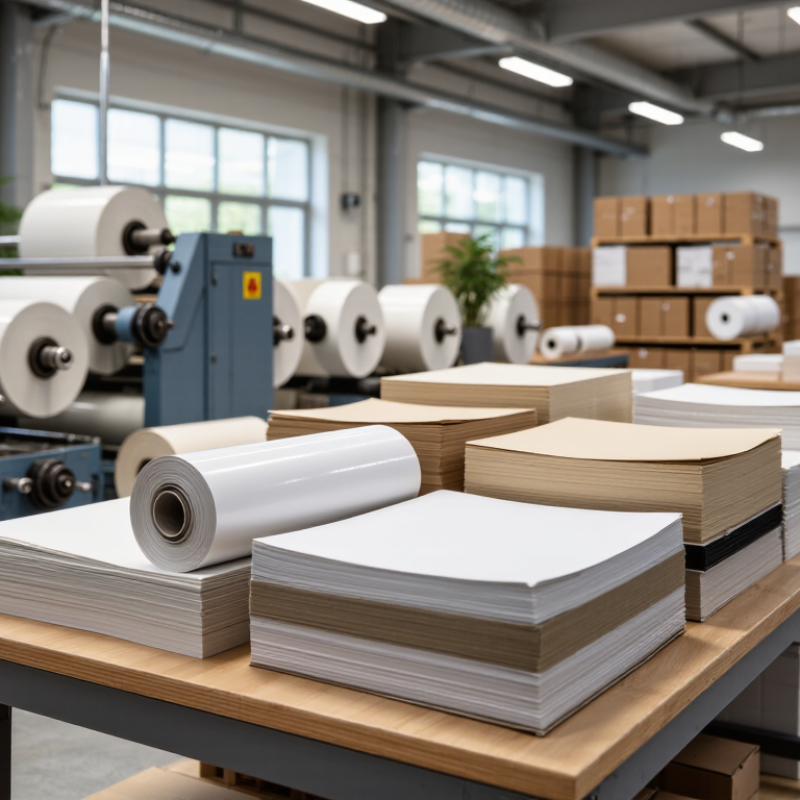
Chinese manufacturers produce several printing paper types for publishing, packaging inserts, offices, and commercial materials. Coated paper has a smooth surface and supports sharp photographs, product charts, and colored catalogs. Gloss coating creates stronger visual contrast, while matte coating reduces reflected light during reading. Uncoated paper feels more natural and absorbs ink faster. It suits books, forms, letterheads, and everyday office documents.
Offset paper is widely used for books, manuals, and school materials. Its controlled absorbency helps reduce uneven text and blurred edges. Copy paper is usually lighter, often between 70 and 80 gsm, and works with laser or inkjet equipment. Heavier cover stock provides stiffness for cards, folders, and short brochures. Thermal paper is designed for heat-sensitive printing, such as receipts and tickets, but storage conditions require careful attention.
Paper selection should match the machine, ink, and finished product. Check basis weight, moisture, opacity, caliper, surface smoothness, and sheet size before ordering. During factory sampling, printers often test feeding, drying time, curl, and color consistency. Small differences can become visible across thousands of sheets.
A practical mistake is choosing high whiteness without checking opacity. Thin paper may show text from the reverse side. Certification documents and quality reports should be verified, not simply accepted. Some specifications still need real press testing.
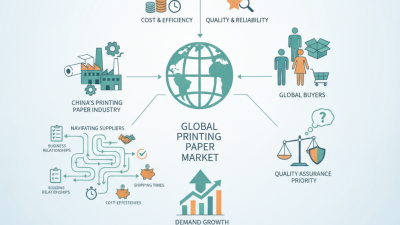
Evaluating China’s printing paper manufacturers requires more than comparing prices. Start with the paper’s intended use, such as textbooks, packaging inserts, or premium brochures. Ask for samples with the same basis weight, brightness, opacity, and surface finish. A 100 gsm sheet may feel different across suppliers. The difference often appears during folding, trimming, or high-speed printing.
Request recent laboratory reports and production records. Reliable manufacturers should explain fiber sources, moisture control, coating methods, and quality inspections. Check whether their testing follows recognized international standards. A factory visit, video audit, or independent inspection can reveal storage problems, dusty equipment, or inconsistent packaging. These details affect paper performance. In my experience, a supplier that answers technical questions clearly is usually safer than one offering the lowest quotation. Still, communication alone proves little.
Tips: Test samples on your own press. Measure curl after printing. Check color consistency across several cartons. Confirm minimum order quantities, loading methods, lead times, and replacement procedures in writing. Ask how they handle damaged rolls or moisture exposure. Do not rely on one sample. Paper quality can change between production batches, and no checklist is perfect. A small trial order may cost more initially, but it can expose issues before a large shipment. Carefully compare the quotation with actual specifications, not just the final number.
Reliable printing paper suppliers should prove quality through measurable standards, not attractive samples alone. Key specifications include basis weight, brightness, opacity, caliper, smoothness, and moisture content. These factors affect ink absorption, feeding stability, image sharpness, and paper curling. A consistent mill should provide test reports for each production batch. ISO 9001 certification can indicate controlled quality processes, while ISO 14001 reflects structured environmental management. Certification matters, but it does not replace practical testing.
Sustainable sourcing also deserves careful verification. FSC or PEFC certification may support responsible forest management claims, depending on the certificate’s scope and validity. Recycled content should include clear percentage information and supporting documentation. For archival or long-term documents, buyers may check ISO 9706 requirements, especially concerning permanence and acid-free performance. However, paper that meets a standard can still behave poorly in a humid warehouse. That uncomfortable detail is easy to overlook.
Tips: Request current certificates, technical data sheets, and recent batch samples. Test paper on your actual printers, inks, and finishing equipment. Check ream packaging for moisture protection and storage guidance. Ask suppliers how they investigate curl, dust, jamming, or shade variation. A small trial run often reveals more than a polished sales presentation. Results may differ between batches, so record testing conditions carefully.
Comparing Chinese printing paper suppliers requires more than checking the lowest quotation. Start with the paper’s intended use: textbooks, packaging inserts, art books, or office forms. Ask for GSM, brightness, opacity, moisture range, surface finish, and roll or sheet tolerances. Request a recent sample from the same production line. Samples can hide variation. Measure them under identical lighting and run a small print test.
A dependable supplier should explain its pulp sources, coating process, inspection points, and corrective action procedures. Look for documented quality systems and test reports from recognized independent laboratories. Verify production capacity against your monthly demand, not an impressive annual figure. Ask how they handle color shifts, damaged cartons, moisture exposure, and delayed shipments. Clear answers matter.
During factory communication, record response times and technical accuracy. If a salesperson avoids basic specifications, future claims may become difficult.
Compare total landed cost, including packaging, inland transport, insurance, duties, payment terms, and waste rates. An apparently cheap grade may create dust, curl, ink absorption, or frequent machine stops. Calculate cost per usable printed sheet.
Before signing, confirm tolerances, inspection rights, replacement terms, and production lead times in writing. Keep a retained sample from every approved batch.
Ideally, test two or three suppliers through a controlled trial. Results may challenge your first choice. That is useful, not embarrassing. No comparison is perfect; humidity, equipment, and operator skill can change results.
China Best Printing Paper Manufacturers and Suppliers?
Ordering, exporting, and verifying paper suppliers requires more than comparing quotations. FAO’s Forestry Production and Trade data recorded global paper and paperboard production at about 423 million tonnes in 2022. This scale creates wide quality differences. Request a production sample, not only a catalogue sheet. Check GSM, caliper, moisture, brightness, opacity, and surface smoothness. Record each result against your required specification.
Some suppliers sound perfect. That is risky. Verify the factory address, legal registration, production capacity, and laboratory equipment through independent documents or a video inspection. Ask for recent test reports and certification numbers. Confirm whether certificates cover the actual factory, not merely a trading office. A pre-shipment inspection should compare finished reels or sheets with the approved sample. I would also inspect packaging, pallet strength, edge protection, and container loading photographs.
Export planning needs equal attention. UNCTAD’s Review of Maritime Transport 2023 reported global maritime trade of approximately 12.3 billion tonnes in 2022, showing how easily delays can affect supply chains. Clarify the Incoterm, HS code, loading port, insurance responsibility, and document list before payment. Use a written tolerance for GSM and moisture. Small differences can damage printing performance. My own review of sourcing checklists suggests one weakness: buyers often verify documents but neglect storage conditions. Paper absorbs humidity quickly. That detail deserves more attention.